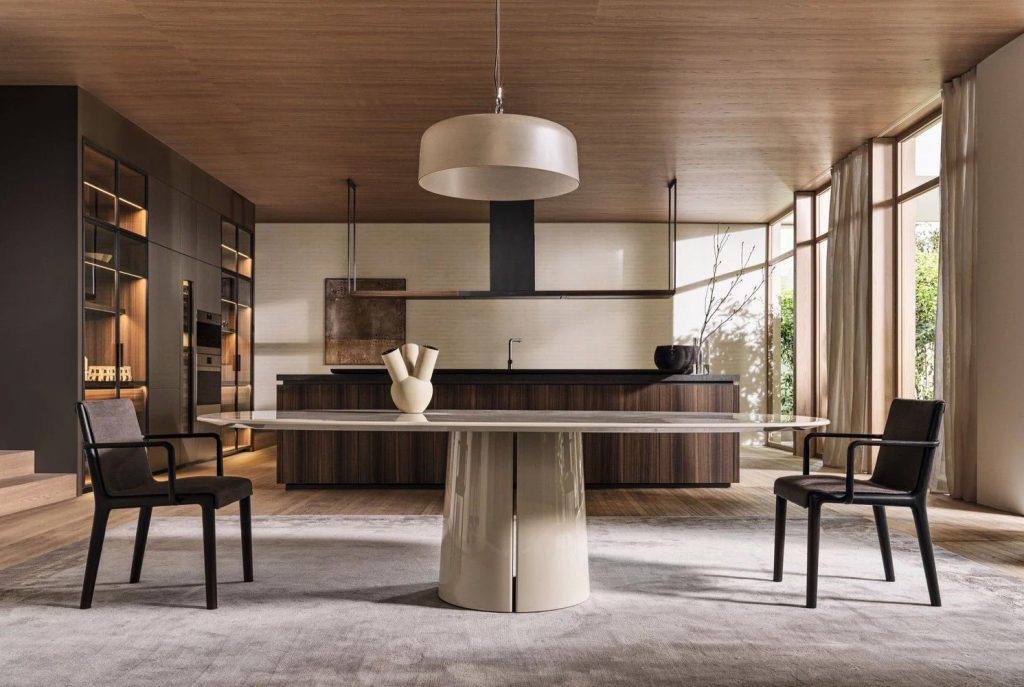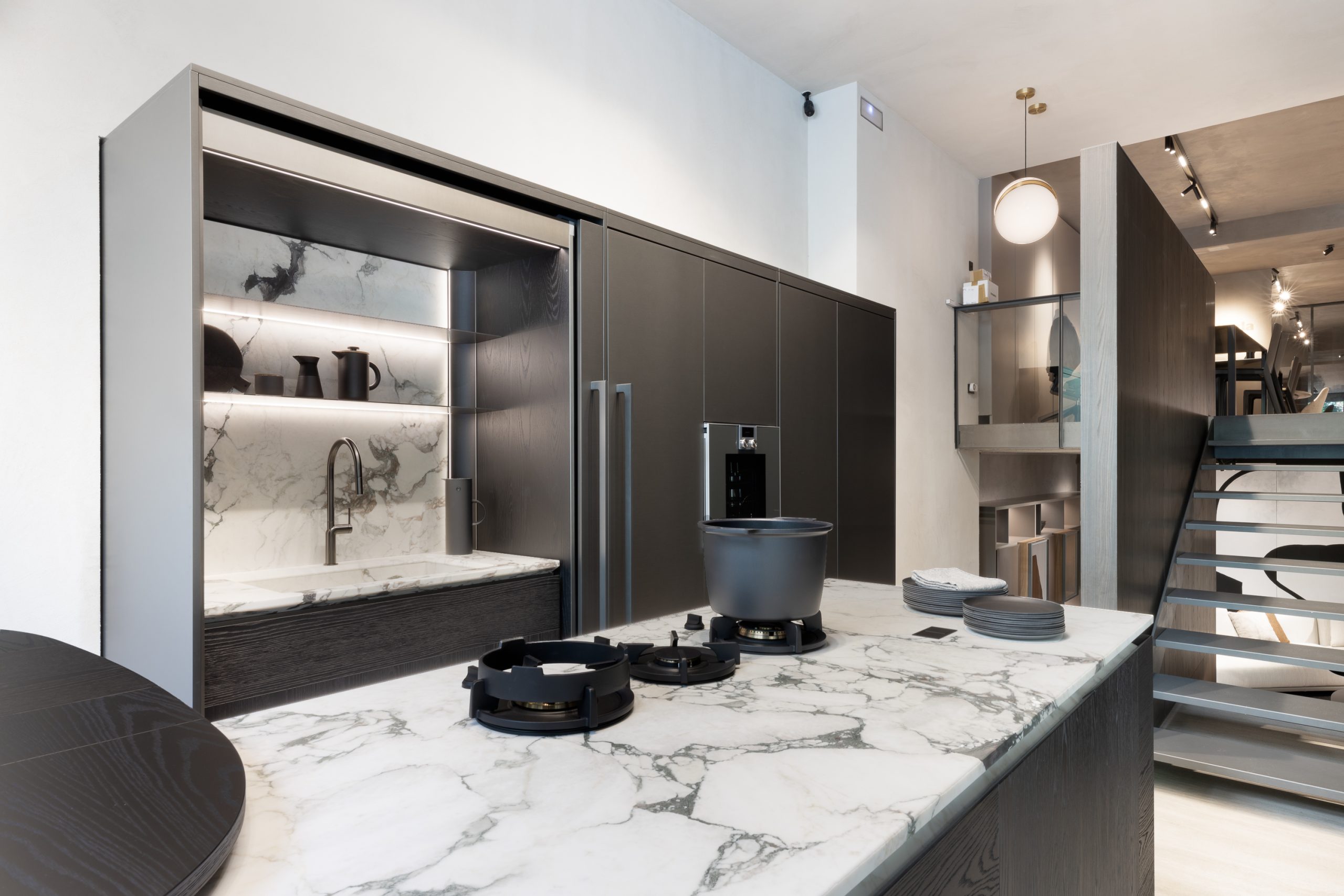
When designing a kitchen, the question arises as to which is the better alternative between marble and granite. Both natural stones add elegance and exclusivity; however, they present fundamental differences related to their composition, durability, and appearance. Marble stands out for its unique veining and smooth look, although it is more porous and requires greater care. Granite, on the other hand, offers remarkable resistance to stains and heat, as well as a wide range of colors. Thoroughly analyzing the advantages and disadvantages of each material, considering use and style, facilitates making the ideal decision for your kitchen project.
Marble vs. Granite: What Are the Differences?
1. Composition and Origin
- Marble: It is a metamorphic rock composed mainly of calcium carbonate, formed through the recrystallization of limestone under high pressure and temperature conditions, exhibiting veining that enhances its aesthetic beauty. It is generally used in interior spaces that seek a sophisticated look, although its porosity requires greater maintenance precautions.
- Granite: It is an igneous rock that results from the solidification of magma, composed of quartz, feldspar, and mica, which gives it a granular structure and remarkable resistance. This strength makes it an ideal choice for countertops, floors, and areas exposed to daily wear and tear.
2. Appearance and Aesthetics
- Marble: Its unique veining and soft tones provide a sophisticated aesthetic, ideal for high-end projects. It is found in colors such as white, cream, gray, and green, with striking veins in gold, black, or brown, enhancing the elegance of each space. It requires certain maintenance precautions due to its porosity and lower resistance to scratches or impacts.
- Granite: It exhibits a granulated appearance and greater chromatic variety, with patterns ranging from uniform to very dynamic. It is available in dark tones, blacks, blues, and reds, offering versatility to adapt to different design styles and outdoor spaces.

3. Resistance and Durability
- Marble: Being more porous, it is susceptible to stains, acids, and scratches, requiring frequent sealing and constant care, especially in kitchens with citrus juices or wine. This condition may demand a greater investment of time and considerable resources in maintenance.
- Granite: It stands out for its extraordinary resistance to impacts, heat, and stains, thanks to its low porosity. This makes it the best choice for high-traffic areas and intensive use, where durability is essential.
Both options provide beauty and elegance but differ in terms of care and functionality.
4. Maintenance and Cleaning
- Marble: Its delicate surface requires specific cleaning products and constant maintenance to prevent stains and damage that affect the original beauty of the stone. Being more vulnerable, it is advisable to avoid abrasive substances and acidic chemical detergents.
- Granite: It stands out for its resistance and ease of care, as water and neutral soap are sufficient for daily cleaning. However, it also needs periodic sealing to prolong its durability, offering additional protection against stains and corrosive agents.
Both alternatives are attractive but differ in the intensity of care and the products suitable for their preservation.

5. Price and Availability
- Marble: Its exclusivity and beauty increase its price, often representing a significant investment in luxury kitchens. Depending on the type and origin, the value can vary considerably, making it attractive to those seeking a distinctive finish.
- Granite: Although it also has premium lines, it is more affordable, offering an outstanding quality-price ratio to balance aesthetics and budget. Its remarkable resistance and variety of colors make it attractive, allowing it to adjust to various investment ranges.
Both alternatives offer value but differ in cost, maintenance, and exclusivity. This differentiation encompasses durability and style, so it is advisable to evaluate them carefully.
Granite or Marble? Which to Choose for Your Luxury Kitchen?
The choice between marble and granite always depends on your priorities and the style you want to achieve in the kitchen.
- If you’re looking for a classic, refined finish and don’t mind the idea of more rigorous maintenance, marble may be the best option. Its delicate appearance and unique veining make it an unparalleled decorative element.
- If you need durability, ease of cleaning, and a modern or rustic look, granite stands out as the ideal alternative. This material combines durability and a wide range of shades, easily adapting to intensive use.
In both cases, your kitchen will project a sense of luxury and exclusivity. Before making a decision, consider the frequency of use, the overall aesthetic you desire, and the time you plan to invest in its care, so that the result is harmonious and functional.

Conclusions on the Differences Between Marble and Granite
If you’re a design professional or a private client looking for the best option for a luxury kitchen, it’s essential to understand the particularities of marble and granite before making a decision.
At Corsobori, we specialize in offering a wide selection of high-end natural stones, ideal for those seeking quality, durability, and impressive aesthetics. Each project is unique, and our team will be delighted to advise you with detailed information and personalized recommendations to make your kitchen truly exclusive. Contact us and discover how the right choice of these materials can completely elevate the concept of your space.
Do you have any questions? Write to us and our experts will advise you without obligation.